Classic Country

December 10, 2022

# 79

Charley Pride
Happy Christmas Day
1998

(Originally released 1970 as Christmas In My Home Town on RCA Victor)
Back

THIS COMPILATION (P) 1998 BMG Special Products. The BMG logo is a trademark of BMG Music. Manufactured by BMG Special Products, a unit of BMG Entertainment.

# 8 – 1970 – Billboard Christmas

Genre : Classic Country

Charley Pride was the best-selling recording artist RCA had since Elvis Presley.  His greatest successes were in the late 1960’s and throughout the 1970s.  Charley Pride released over 30 albums from 1966 – 1979.  This is his only Christmas album.

Charley Pride was born in northern Mississippi in a small town called Sledge.  His family was large and were poor sharecroppers.  After high school, Charley Pride chased his dream of professional baseball.  His older brother was already playing in the Negro Leagues.

After suffering a hand injury, Charley Pride spent all his baseball career in the Negro Leagues and in small farm teams of the major leagues.  While playing baseball, he continued to sing around locally.  By this time, he was living in Montana.  One of the baseball managers for a team he was playing for heard him sing and he hired Charley Pride to sing before the games.  All this time his real job was working at a smelting plant in Helena, Montana.

Charley Pride recorded a couple of demo records and Chet Atkins at RCA Nashville heard them and brought him down to Nashville.  Charley Pride signed with RCA Nashville in 1965.

Although he had a recording contract with a major label, his first few singles did not do well, and he stayed in Montana at the smelting plant.  The smelting plant was a dangerous job, and Charley Pride would rather have made his living playing baseball, but that wasn’t working out either.  With his third single, released in 1966, Charley Pride started getting noticed in the Country music scene.  He experienced racial bias in his early days, especially when he would show up for concerts and most fans did not know he was Black because his photo was never released on his singles.

Charley Pride was aware of Country music fans’ apprehensions and would talk about it and therefore get it out in the open.  After a short time, with songs consistently charting on Billboard’s Country charts, Charley Pride’s race became of little concern to Country music fans.

Charley Pride had his biggest hits in the late 1960s through the mid-1970s.  His biggest hit, and his signature song, Kiss An Angel Good Mornin’ was released in 1971.  He won awards all throughout his life through the Country Music Association, The Grammys and The American Music Awards.

Charley Pride died in Dallas, Texas of complications from Covid 19 in December of 2020.

The Christmas CD reviewed here is a reissue of Charley Pride’s Christmas album from 1970 originally titled Christmas In My Home Town.  This reissue was released by BMG Special Products in 1998.  Since then, another reissue was released with the original album title and three bonus Christmas songs.  (I may have to buy that one just for the three extra songs).

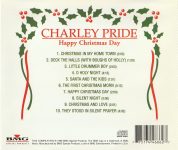
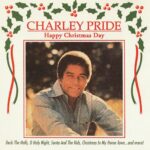
Because the reissue uses a different title, the original artwork has been replaced as well.  The cover of the CD I currently have, shows a picture of Charley Pride sitting with the sun directly above him.  It is an outdoor setting, and he is dressed casually.  The picture is surrounded by a red border.  The top of the CD cover has festive holly leaves and berries surrounding Charley Pride’s name and the CD title, which appear in red lettering.  A few song titles are listed at the bottom.  I really like the cover from the original album better.  It features Charley Pride leaning on a decorated mantle while wearing a Santa suit.  It is much more festive, and I wish they had used something similar for this CD cover.

The artwork on the back of the CD is similar to the front.  The festive holly leaves and berries surrounding Charley Pride’s name and the CD title are exactly as they are on the front, but where Charley Pride’s picture is on the front, on the back, that space has been replaced with a numerical track listing that also includes time signatures.  The bottom of the back cover features typical copywrite notices.

The front cover is a single piece of paper, and the back of the front cover has artwork that is similar to the back cover design.  The back of the CD cover has Charley Pride’s name and CD title as is on the front and back, but the festive holly leaves and berries are missing.  Also, just as on the back of the CD, there is a numerical track listing, but without time signatures.

So, very little information is provided with the CD.  No writer credits or recording information is provided.  Over half of the songs are original Christmas songs and writer credits would have been very helpful, but I was able to get them off the original album label.  Also, knowing this was recorded at RCA Nashville tells me that the musicians that play on the album were colloquially known as The ‘A’ Team.  Jack Clements produced the album, and it has that sweet Nashville sound that RCA was known for.

I guess along with a new title and new artwork, the producers at BMG Special Products decided to rearrange the songs as well.  They are in a completely different order than what was on the original album.

There were 10 songs on the original album, and they are all here.  Like I said earlier, the album was again reissued in 2013 with 3 additional bonus tracks.  Six of the songs featured on this CD are original Christmas songs unique to this album.  That’s what makes this such a unique Christmas record.  The other four songs are mostly traditional Christmas hymns.

Both the CD and the album begin with the original Christmas song made famous by Charley Pride, Christmas In My Home Town.  This is Charley Pride’s best known Christmas song.  The arrangement is very festive as Charley Pride describes all the sights and sounds of Christmas in his hometown.  The Jordanaires provide solid background harmonies.  This unique, popular Christmas song is in my Top 500 Classic Christmas Recordings.

The 2nd song, Deck The Halls (With Boughs Of Holly), is traditional in all manners of arrangement and vocals.  Charley Pride has a strong voice, and it is used to great effect on this song.  Once again, The Jordanaires assist Charley Pride with the vocals.

Little Drummer Boy is the 3rd song on the CD version.  I find the arrangement unique in that cellos accompany the melody that is mostly supplied by a studio band.  The snare drum is there as in most arrangements.  Usually, the vocals are delivered in a somber manner, but here, Charley Pride uses his deep voice to push the vocals to the front of the song.  The backup harmonies are provided by The Nashville Edition.

O Holy Night, the 4th song, is sparse with the instrumentation, with the celeste carrying most of the melody.  All that is overshadowed by Charley Pride’s terrific vocals and The Nashville Edition providing reverent harmonies.

It just occurred to me that what makes Charley Pride’s vocals so different is that his diction is very pronounced as he annunciates all the syllables of the words.  He doesn’t colloquially run over the words as many singers, especially Country singers, do.

Starting with the 5th song, Santa And The Kids, the rest of the CD is all original Christmas songs except for Silent Night.  Santa And The Kids is a fun Christmas song directed to children, cautioning them to heed an early bedtime on Christmas Eve.  Should they linger awhile, and try to sneak a peek, Santa will skip their house.  This is the first song on the CD that exemplifies a Country arrangement.  The melody begins with a fiddle that stays throughout the song.  It is nicely accompanied by celeste and a rolling drum pattern and closed guitar chords.  Once again, The Nashville Edition provides festive harmonies.

Another original Christmas song, The First Christmas Morn, is a treat due to the fact that while most original Christmas songs are secular in nature, The First Christmas Morn is a somber, passionate story of the first morning of Jesus’ birth. The arrangement begins lightly with lap steel guitar and celeste.  As the song progresses, the strings come in to play.  And as well, The Nashville Edition provides somber harmonies.

The 7th song, Happy Christmas Day, is another original Christmas song unique to this album.  Charley Pride describes the traditional sights and sounds of Christmas, yet reminds us that that is not all it takes to make a Happy Christmas Day.  He implores us that we need to include the birth of Jesus to complete the perfect Christmas day.  The melody features lead guitar matched to the celeste, accompanied by sleigh bells.  The arrangement has a welcoming Country feel.

The 8th song is Silent Night.  Charley Pride delivers the vocals in a somber mood.  The melody begins with organ and chimes and as the song progresses, the celeste begins to carry more of the arrangement.  The Jordanaires return to assist Charley Pride.  This is the most somber, reverent song on the CD.

Christmas And Love is the 9th song and is another Christmas song unique to this album.  The song begins with lead guitar matched to the celeste.  As Charley Pride begins the vocals, they are joined by more contemporary band instruments.  The song speaks softly of a person reflecting on his meager means but accepting it willingly because by God sending His Son down to earth to cure the whole world with love, is all that Christmas needs to be for him.

The CD’s final song, They Stood In Silent Prayer, is another original, religious based Christmas song.  The song begins tremendously before the arrangement moves to softer instrumentation.  Charley Pride sings about the shepherds and livestock standing around the manger after Jesus’ birth.  It is a beautiful song that speaks strongly about what Christmas really is about.  The Nashville Edition provides reverent harmonies.

This is not a popular Christmas album in the 21st century, and Charley Pride is not someone that comes to mind when you think of Classic Christmas artists, but it was his unique, slightly Southern, deep baritone voice and original Christmas songs that speak of Jesus that made this a Top Ten Christmas album in 1970.  This is a terrific album to mix in with more familiar Christmas songs.

If I must be honest, there are some songs on here that are not as good as others.  Deck The Halls (With Boughs Of Holly) is one that comes to mind.  It just seems flat, and the arrangement doesn’t allow Charley Pride’s voice to shine as well as on other songs.  But mostly, I think it’s the song itself.  It’s not the kind of song Charley Pride excels at.  He is best with happy children’s songs and reverent religious songs.

I have to remind myself this is a Country Christmas album from 1970.  The arrangements on the familiar songs are nice.  They are soft, lush and festive.  That is what RCA Nashville was known for.  Although there are strings included, they never overshadow the simpler instruments featured.

This is one of the better Christmas CDs I have in my collection because 60% of the songs are original Christmas songs, and they are the standout songs on this CD.  Christmas In My Home Town is a Classic Christmas song and should be familiar to regular listeners of Christmas music.  If you can appreciate that song and have not heard the other Christmas songs on this album, I think you would come to appreciate them just as much.

I give this CD :

****
December 8, 2022

# 76

Faron Young
Silver Bells
1988

(Originally released 1979 as A Christmas Card From Faron on Goldust Records)

Back

© (P) 1988 Highland Music, Inc.

Genre : Classic Country

When I pulled this off the shelf to review it, I said to myself “This is going to be good”.  If you like Classic Country Christmas music, this is it!  This reissue of Faron Young’s Christmas album from 1979 is brought to us by Highland Music, Inc.  It is a reissue of A Christmas Card From Faron.  I’m really surprised that this did not chart on Billboard’s Country charts.  Faron Young charted consistently in the 1960s and 1970s on the Billboard Country Album chart, but by 1979, he had dropped off the charts entirely.

Faron Young was born in Shreveport, Louisiana in 1932.  He started singing at an early age, and before he graduated high school, he appeared on Louisiana Hayride, in 1951.  Faron Young moved to Nashville in 1952 and a few months later was offered a recording contract with Capitol Records.  Soon after he was drafted into the Korean War.  Just as luck would have it, Faron Young’s second single had just topped the charts and his third was climbing fast.  Faron Young was chosen as the featured singer in the US Army Band replacing Eddie Fisher.

Faron Young starred in some low budget movies in the mid-fifties and appeared on TV often.  This exposure helped his career greatly.  His singing style during the 1950s was Honky Tonk, but after leaving Capitol Records in the early 1960s, he changed to a more mainstream Country sound.

Faron Young was the first to record and release the Willie Nelson song, Hello Walls.  This became one of his most successful and requested songs.  Faron Young recorded into the 1990s, but never matched the success he had in the 1960s to the mid-70s.

Country music in Nashville in the 1960s was big business.  Country music in Nashville in the 1960s was also highly competitive, with Chet Atkins at the helm at RCA Nashville, and Capitol Records Nashville giving them a run for their money.  By the 1970s, the music business had changed and Faron Young failed to keep up.  Through failing health, depression and bouts of alcoholism, Faron Young took his own life in 1996, at the age of 64.

This reissue of his only Christmas album has a different title than the original album, and although all 12 of the original songs are here, they are in a different track order.  This is actually the first of two reissue CDs of his original album.  Country Christmas was released in 1990, but it is the same album.

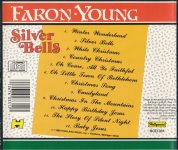
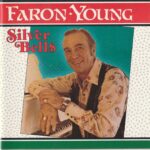
Since the title is different, so is the artwork.  The cover of the CD features a smiling Faron Young dressed in a fashionable 1970s Country shirt and vest.  He is resting at a piano.  Across the top of the cover runs a red banner and Faron Young’s name appears in it.  Directly below is the CD title, “Silver Bells” in red letters.

The back of the CD features the same red bar and artist name across the top.  The CD title is also similarly placed as on the front cover.  The back of the CD has a numerical track listing in a slightly tilted yellow box.  Both the front photo and the yellow box on the back are superimposed over a white background that has a small festive graphic design.

The CD cover comes out and opens along a single fold-out.  Unfortunately, the inside is completely blank.  Ouch.

The back of the CD cover is an exact copy of the back of the CD except that the UPC symbol and the copywrite notices aren’t included.  Another ouch.

The artwork for the CD is somewhat lacking.  We know the year, but no writer credits are given.  Normally that wouldn’t be a big deal, but the original album had a lot of original Country Christmas songs on it.  Also, no biography or recording information is included.  Those things are always bonuses, but I can appreciate what this CD is.  It is a low budget CD of an old Country Christmas album.  It is also an exact copy, musically, as the original album, and I’ll accept the things it lacks to be able to have the original album fully intact.

This is really a very pleasant CD.  The songs are not too Country.  Faron Young has a great voice that sings Country without sounding Country.  He lacks the deep southern twang found on many Country artists of the 1960s, especially someone from Louisiana.

Of the 12 songs, only 6 are familiar Christmas songs.  Of those 6, 4 are secular Christmas songs from the 20th century.  Oh Come, All Ye Faithful and Oh Little Town Of Bethlehem are the only traditional Christmas hymns.

The CD begins with 3 of the 4 secular Christmas songs in a row.  Winter Wonderland is the 1st song.  The melody gallops along with electric guitar and corresponding piano, all accompanied by a terrific mixed chorus.  Unfortunately, without good liner notes, I do not know who they might be, but they sound great.

The 2nd song is the title of the CD, Silver Bells.  The music seems to be provided by a studio “band” as opposed to an orchestra.  That means that none of the songs are overly produced with lush strings and large brass sections.  Silver Bells has a traditional arrangement that features the celeste, allowing the song to live up to its name.  Faron Young’s vocals are solid and pleasant.  He sings with just a slight Country dialect that subtlety reminds you that he is a Country singer.

White Christmas, the 3rd song, is a very pleasant Christmas song that starts with the celeste and it is the featured instrument in the arrangement.  The celeste operates like a piano, whereas keys are played.  Instead of the hammer hitting strings under tension as with the piano, the celeste uses the hammer to strike tuned metal bars, similar to a xylophone.  It is used in a ton of Christmas songs, but I have never heard it used so well as it is in this song.  It is shadowed with an electric guitar, and Faron Young’s vocals are very soft and endearing.  The chorus provides a lush background.

It isn’t until the 4th song that we get to hear Faron Young at his best.  Country Christmas is an original Christmas song.  It is kind of interesting that as unique as this song is, I have one other song titled Country Christmas, but the other one was written and performed by Loretta Lynn on her Christmas album from 1966.  The one Faron Young sing’s here is a different song.  This song lives up to its title and is a very Country Christmas song.  It features banjo up front, so you might say that this borders on Bluegrass.  The song speaks of a quiet little hamlet in a valley that expresses it’s Christmas spirit in an old-fashioned way by gathering together to sing the praises of Jesus.  The more I hear this song, the more I like it.  This is a really good Country Christmas song from the late 70s.

The 5th song is one of only two traditional Christmas hymns.  Oh Come, All Ye Faithful features the piano as the main instrument heard.  The arrangement is sparse.  The piano is accompanied by more instruments as the song progresses, but they never overshadow the piano.  For the second verse, Faron Young is joined by the mixed chorus that echoes Faron’s vocals softly.

Song # 6 is the other traditional Christmas hymn, Oh Little Town Of Bethlehem.  It begins with a soft acoustic guitar.  After the intro, Faron Young begins to sing the vocals endearingly.  The chorus is there to provide additional softness.  The acoustic guitar continues the melody as it is joined by electric piano and a celeste.

The 7th song, is Christmas Song.  Though improperly titled, this is the Classic written by Robert Wells and Mel Torme.  The secular arrangements return as this is markedly different than the two previous songs.  Once again, the piano carries the melody.  As the song progresses, other instruments join in.  The small group combines electric piano and the celeste to keep the melody soft.  The mixed chorus gives a wonderful festive feeling to the song.

The rest of the CD features original Christmas songs.  The Country returns with the 8th song, Candyland.  The song’s melody combines electric and acoustic piano in the arrangement.  A small electric guitar passage introduces the song.  Faron Young exhibits his Country dialect in a welcoming manner.  The song tells of a dream Faron Young had on Christmas Eve.  He dreamt of a poor Country child that expects nothing for Christmas and can only dream.  His dream describes a Country Christmas setting using chocolate drops, lollipops and gingerbread men dancing around as the descriptive nouns.  It’s a unique and fun Christmas song.  The acoustic arrangement is enhanced with the lap steel guitar that provides the Country flavor.

Christmas In The Mountains, the 9th song, features the banjo once again.  It describes Faron Young returning to the mountains because he really loves Christmas at home.  The song describes all the traditions and smells of Christmas In The Mountains.  The arrangement is pure Country.  With the banjo, lap steel and electric guitar, it’s impossible to hear this as anything else.  It is very well done.

The 10th song, Happy Birthday Jesus, is an endearing tribute to Jesus Christ.  The arrangement is light, but it is not without a lot of instruments coming together for the melody.  As the song progresses, the drums come in to drive the rhythm while the lap steel gives the song a pleasant Country flavor.  I actually have three different Christmas songs titled Happy Birthday Jesus.  This one, and another by Patti Page and Burl Ives, recorded in 1965 and 1968, respectively.  Reba McEntire also recorded a song titled Happy Birthday Jesus, for her 1987 Christmas album.  But in all honesty, the song Patti Page and Burl Ives sing is Happy Birthday, Jesus (A Child’s Prayer), and Reba’s is titled Happy Birthday Jesus (I’ll Open This One For You).

The first half of The Story Of Silent Night describes the writing of the Christmas song, Silent Night.  I think there are a lot of liberties taken as to the events that may have happened during Joseph Mohr’s writing of the song, but it is a pretty good original Christmas idea.  For the second half of the song, an acoustic guitar introduces the actual song, Silent Night.  Faron Young sings the traditional lyrics, and the arrangement is traditional as well.  The vocals are good, and the chorus provides lush accompaniment.

The last song on the CD, Baby Jesus, opens with the celeste.  It is a slow-paced song that describes the events on the night of the birth of Jesus.  Other than Faron Young’s soft dialect, this would be hard to define as a Country song.  For the first time on the record, the chorus offers more than just oohs and aahs.  They sing the lyrics of the chorus as Faron Young handles the verses.  The celeste, accompanied by a lap steel guitar and surprisingly, a conga, come together to produce a terrific, albeit unusual, arrangement of a great original Christmas song.  The chorus joins Faron Young in unison to finish the song sweetly.

All the original Christmas songs were written by Bill & Jody Emerson, with Lionel A. Delmore assisting on Baby Jesus.  I don’t know if that’s two brothers or a husband-and-wife team.  Whatever it is, they write good original Christmas songs.  Most of the songs speak of Jesus directly.  It’s good to see they focused on the reason for the season for their original songs, other than just the sweet smells, bells and ribbons of a secular Christmas.

The songs on the CD are in a different order than they were on the original album.  On the album, the original Christmas songs were mixed in with the familiar Christmas songs, but here on this CD, the secular Christmas songs are played first, followed by the two traditional Christmas hymns and then five of the six original songs close out the CD.  I don’t know if that was on purpose, but I suppose it was.  By putting all the original Christmas songs close together at the end, it gives the CD a more unique feeling.  By the time you get to the end, you tend to forget the familiar Christmas songs at the beginning and focus on the original ones.

This CD is a reissue of a really good Country Christmas album from a man who use to dominate the Country music charts, but was past his glory at the time of this recording.  Nonetheless, it is a really good Christmas record.  The vocals are smooth with just a touch of Country.  The arrangements are soft and festive because of the large use of the celeste and the lap steel guitar.

I can highly recommend this CD if you like original Christmas songs with a little Country flavor.  Especially if you like older Christmas music.  This Christmas CD should not disappoint many listeners.  Whether it’s for yourself or if it’s played for a group of friends and family, you will probably receive more compliments than rejections.

Faron Young turned out a terrific Christmas album in 1979 and this is it.  I just wish they had used the original title and artwork.

I give this CD :

****
November 30, 2022

# 69

Willie Nelson
Pretty Paper
2005

(Originally released 1979 on Columbia)

Back

© 2005 SONY BMG MUSIC ENTERTAINMENT / This compilation (P) 2005 SONY BMG MUSIC ENTERTAINMENT / Manufactured and Distributed by SONY BMG MUSIC ENTERTAINMENT

# 11 – 1979 – Billboard Country

Genre : Classic Country

Everyone should be familiar with Willie Nelson, even if they are not a Country music fan.  There has been no way to escape Willie Nelson’s presence in Pop culture over the last 50 years.  With over 150 albums, 30 movies, a lifetime of charitable giving and countless mentions in the news, Willie Nelson has proved his importance in modern Pop culture.

Willie Nelson was born in Abbott, Texas in 1933, right as The Depression was setting in. His parents separated and his mother moved away.  His dad remarried and he moved away.  Willie Nelson and his sister Bobbie were left alone.  They ended up being raised by their grandparents.  It was his grandfather that gave him his first guitar.  Willie joined his first band when he was 10 years old.

Willie Nelson took odd jobs and moved around often trying to find his place in life.  All the while, he worked as a disc jockey on local radio, wrote songs and played in local bars.  He eventually moved to Nashville and after a year there, RCA offered him a recording contract.  Willie Nelson stayed with RCA Nashville for 10 years and released a lot of albums throughout the 1960s, but none were top sellers.  During this period in his life, he probably made more money from song writing than he did as a recording artist.

After recording a couple of albums for Atlantic Records in the early 70s, Willie Nelson signed a recording contract with Columbia.  By this time, Willie Nelson had become what was termed an “outlaw” because he rejected the large corporate oversite of RCA and the Country music industry in general.

While at Columbia, Willie Nelson was given creative control over his music, and he recorded albums the way he wanted to.  It was at this same time that he started recording with Waylon Jennings and later Merle Haggard.  From this point on, Willie Nelson’s albums topped the charts, and many crossed over to the Pop charts as well.  Willie Nelson continues to release albums and tour when his health allows it.

This CD reissue of his 1979 Columbia Christmas album comes to us from SONY BMG MUSIC ENTERTAINMENT.  The CD contains all the songs from the original album, and all are in their original order.  There are 12 songs included and all but two are secular Christmas songs, and all songs should be familiar Christmas songs.  This is Willie Nelson’s first Christmas album, and he would go on to release 2 more; one in 1994 and one recorded with his sister Bobbie in 1997.

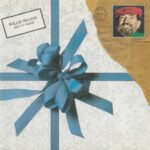
The cover artwork of the CD replicates the original album cover exactly.  It is made to look like a Christmas gift wrapped in silver paper with a large blue ribbon that was sent in the mail.  All the brown packaging paper has been removed except a small portion at the top right corner.  It is here that a picture of a smiling Willie Nelson appears as a postage stamp.  Beside it is a cancellation mark that reads “Austin, Texas 78767 25 Dec 1979”.  On the left side of the Christmas gift is the album title in a white square meant to resemble a “to / from” gift tag. 

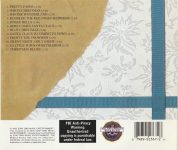
The back of the CD resembles the back of the album closely.  The artwork on the back of the CD uses about 2/3rds of the artwork from the back of the album.  It is made to look like the backside of the wrapped gift.  The space where the brown packaging paper remains features a numerical track listing with time signatures.  The original album didn’t feature time signatures, but it did have producer and recording credits that don’t make an appearance on the back of the CD.

The CD cover comes out and opens along a single fold-out.  And inside is found…nothing.  Blank white on both pages, void of any useful information.  Bummer.  This seems to be a common feature, I mean, non-feature, of SONY BMG MUSIC ENTERTAINMENT reissues of older albums.  The back of the CD cover is an exact copy of the back of the CD, so no new information here either.  This also seems to be common to SONY BMG MUSIC ENTERTAINMENT re-releases.

Even though the artwork is basically the same, I believe the colors are a little off.  The blue ribbon on the front and rear covers of the CD is a slightly different shade of blue than found on the album, and the designs on the wrapping paper are silver on the CD and appear to be embossed on the original album cover.  (This could be just the lighting of the photographs online compared to the one I’m holding in my hand).

I did notice that on the CBS Records editions that were released in other countries, the track listing differs than from the Columbia Records editions released in the United States.

This is a quiet Christmas album.  The arrangements are primarily acoustic with a small group of two guitarists, a bass player, drummer, harmonica player and keyboards played by Booker T. Jones.  (I thought that organ sounded familiar).  Booker T. Jones was also the producer of the album.

The CD begins with Willie Nelson’s signature Christmas song, Pretty Paper, originally written in 1963 but recorded and released by Roy Orbison.  Willie Nelson did release his version as a single in 1964, but Roy Orbison is the artist most associated with the song.  The version on this CD is a newer one recorded in 1979 for this Christmas album.  An acoustic guitar carries most of the melody and after the first verse, the piano and harmonica join in for the rest of the song.

The 2nd song, White Christmas, opens with Booker T. Jones on the organ.  Right after the vocals start, the organ drops out and as Willie Nelson begins singing, he is accompanied by a faint acoustic guitar and bass.  The organ soon returns. This song is one of the softest versions of White Christmas I have ever heard.  A wonderful acoustic and electric guitar duet takes the middle instrumental part.

Winter Wonderland begins with wood blocks accompanied by a light organ.  As the song progresses, the other instruments slowly join in.  Willie Nelson’s vocals are soft and deliberate.

Rudolph The Red- Nosed Reindeer begins with the Hammond B3 organ that Booker T. Jones used so effectively in his own group Booker T. & The MG’s in the 1960s.  The Hammond B3 takes most of the melody while an acoustic guitar takes the middle instrumental part.  To hear Willie Nelson sing this, it doesn’t sound like a Christmas novelty song as it does when almost everyone else performs it.

The 5th song, Jingle Bells, begins with an acoustic guitar, which in itself, is unusual, and unlike most other versions, there are no sleigh bells to announce the song.  It does feature a gliding arrangement, and the dual guitars play so well together; at times they sound like they are bells.

The 6th song, Here Comes Santa Claus, begins softly with acoustic and electric guitars.  As Willie’s vocals begin, the Hammond B3 makes its presence known with a 1960s sounding lounge arrangement.  For the finish, the dual guitars join in harmony.

Blue Christmas is the 7th song, and believe it or not, it is one of the more upbeat songs on the album.  That’s hard to imagine because usually the song is delivered in a solemn, sad arrangement.  Here the mood is festive with piano and dual guitars accompanied by the Hammond B3 and a harmonica.  Willie Nelson’s vocals are straight forward, and the sadness in most versions has been replaced with a sense of acceptance.

Santa Claus Is Coming To Town features the Hammond B3 during the first verse.  For the chorus, the twin guitars join in and provide the middle instrumental part.  Willie Nelson returns with the vocals as all the band members stick around to provide a unique arrangement for this Christmas classic.

The 9th song, Frosty The Snowman, should sound familiar to anyone who listens to the radio during the Holiday season.  It is a fun, festive Christmas song that relies on the Hammond B3 to carry the rhythm.  Here again, Willie Nelson delivers the vocals effectively.  As in most of the songs on the CD, the acoustic guitar plays well during the instrumental part.

The 10th song, Silent Night, one of only two traditional Christmas hymns, needs to be heard to be truly appreciated.  Booker T. Jones and his Hammond B3 start the song strongly before quietly dropping off.  As the organ drops to a whisper, Willie Nelson begins his vocals.  Willie Nelson’s pace of the lyrics must be the slowest arrangement I am aware of.  Very solemn, very soft, very convincing.  It’s just Willie and Booker T. until the middle instrumental part and then the acoustic guitar carries the melody.  A harmonica is slightly heard, and everyone softly fades out.  This is a remarkable version of this most recorded Christmas Classic.

The pace picks up but just slightly for O Little Town Of Bethlehem, the 11th song.  Willie Nelson starts a cappella for the first few bars, then the bass is the first instrument heard, but barely.  Slowly and softly, the acoustic guitar and organ join in.  For the instrumental break, the acoustic guitar once again carries the melody.  This is a very short song, so at this point the guitar fades out and the song is over.

Not really, because the instant O Little Town Of Bethlehem ends, the last song on the CD, Christmas Blues, begins.  It’s almost like the two songs are meant to be one.  I believe this is an original Christmas song, but I can’t check it with the writers of the other songs I have titled Christmas Blues because there are no writer’s credits for this song on the CD.  The song is an instrumental, bluesy Christmas song.  The song begins with the whole band, but none of the instruments are overstepping their bounds.  The dual guitars are the primary instruments with the electric guitar taking center stage.  This song is a perfect example of how Willie Nelson would mix Country, Jazz and Blues into his song writing.

This is a Christmas CD I can highly recommend.  This CD contains some of the most soulful, solemn Christmas songs you can fit on one album.  There is not a bad song on here.  In fact, most of the songs, although they are familiar Christmas songs, their arrangements are all original.  The small group of musicians are all in sync and you can just tell that everyone understood the mood Willie Nelson was trying to construct.

All the songs feature acoustic guitar with the Hammond B3 taking a lot of the melody.  There are no large string orchestras or brass instruments to triumphantly declare it’s the Christmas season.  Rather Willie Nelson, et al, deliver the message just as convincingly, but with a softer approach.  You do not have to be a Country music fan to enjoy this CD.  And I don’t think anyone at your party will complain either.  These are terrific, acoustic arrangements of Christmas favorites and guaranteed to keep the spirit bright.

I give this CD :

****
November 24, 2022

# 62

Ray Price
The Ray Price Christmas Album
1991

(Originally released 1969 on Columbia)

Back

Previously released as CBS Records selection number CS 9861
© 1991 Sony Music Entertainment Inc./ (P) 1991 Sony Music Entertainment Inc./Sony Music Special Products Manufactured By Columbia Records/”Columbia” Reg. US Patent & TM Office/ Marca Registrada

Genre : Classic Country

Ray Price was an established Country music star by the time he released his first Christmas album in 1969.  He would release another in 1987.  Noble Ray Price was born in Texas in 1926.  He initially lived on his parents’ farm in East Texas, but after his parents divorced, he split his time between Dallas and the farm in East Texas.

Ray Price started singing and playing guitar locally as a teenager.  While in college, he was drafted into World War II.  After the war, he did not return to college but instead continued singing and playing locally.  Eventually, Ray Price ended up on the radio, locally and in Dallas.

He got his first recording contract in the late 1940s and by the early 1950s, he had relocated to Nashville.  Up until the early 1960s, Ray Price was known for his Honky Tonk style of singing.  After arriving at Columbia in the late 1950’s, he started recording more in the ‘Nashville’ style, using lush orchestras and choruses.  Ray Price released many albums throughout the 1960s and early 1970s and all charted very well on Billboard’s Country Albums chart.  Ray Price continued to record and release albums up until his death from pancreatic cancer in 2013.

This CD reissue of Ray Price’s Christmas album from 1969 comes from Sony Music Special Products and Columbia Records.  All the original songs are here and in their original order.  Out of the 11 songs, only two could be considered secular Christmas songs.  All the others are traditional Christmas hymns and carols.  There does seem to be an original Christmas song, and even it is a Sacred song.

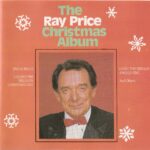
The CD cover does not resemble the original album cover in any way.  The CD cover shows a current (1991) picture of Ray Price in a tux with a red bow tie.  It is framed with a thin black border.  The title on the CD is displayed at the top of the CD.  A few songs from the album are listed on either side of the photo.  All is presented on a red background decorated with white snowflakes.

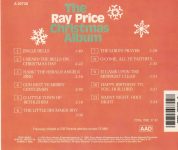
The back of the CD features the same red background, the same CD title and lettering as found on the front cover.  Most of the back of the CD features a numerical track listing with time signatures.  Towards the bottom are your typical release copywrite notices.

One important thing that I like to see is the letters AAD.  Those familiar with this blog know that I like that because it means you are getting the original Analog album that was originally produced on an Analog tape deck but is now presented in a Digital format.  Typically, it wasn’t until 1985 that albums were produced digitally.  That means, no synthesizers, no drum machines and no digital production techniques.  What it really tells me is that these are NOT re-recordings.  You really must be careful when buying Christmas CDs that you think were recorded during the artist’s  peak.  Sometimes, in small print, the CD might say, “re-recordings” or say that “these are not the original recordings”.  You must be careful.

The cover of the CD opens along a single fold out, but the insides are completely blank.  This seems typical of Sony Music Special Product releases.  I wish they would have filled that space with a short biography or a short narrative about the recording of this album.

The back of the CD cover is an exact duplicate of the back of the CD.  Once again, this seems typical of Sony Music Special Product releases.

By 1969, Ray Price had become a reliable Country music star.  The Honky Tonk days were over, and his terrific baritone voice was suited to “The Nashville Sound” as well as Pop standards.  In fact, many of Ray Price’s albums crossed over onto the Pop charts.  The songs on this Christmas album reflect that.  The songs have a slight Country feel to them, but I think that is due more to Ray’s vocals as opposed to the instrumentation.  Cam Mullins & his Orchestra provide traditional lush arrangements of familiar Christmas hymns and carols.

The CD begins with the only modern secular Christmas song on here, and that is Jingle Bells.  The song opens with sleigh bells, and the arrangement is a full orchestra.  Ray Price’s vocals are traditional in every sense and the unknown chorus provides a light festive mood.  I’ve said this before, I don’t know who the chorus is, they’re never credited, and they sound a lot like the Anita Kerr Singers, but this was on Columbia Records and the Anita Kerr Singers worked at RCA Nashville.  It was probably not that difficult to put together a wonderful chorus in Nashville in the 1960s.

The 2nd song, I Heard The Bells On Christmas Day, is presented with a traditional arrangement of lush strings and chimes.  Ray Price puts his baritone voice to good use with this familiar Christmas song.

Hark! The Herald Angels Sing follows as the 3rd song on the album.  Again, Ray Price employs his deep baritone voice to deliver a somber and passionate rendition of this popular Christmas hymn.  The chorus supports Ray Price on the refrains.

The pace and the tone itself, changes with the 4th song, God Rest Ye Merry Gentlemen.  The tempo is much slower than the previous songs, and the instrumentation is softer.  An acoustic guitar is heard up front while a string orchestra joins in at the end of the verses, and during the refrains.  Once again, the chorus is clearly heard on the refrains.  This is a wonderful version of this Christmas standard.

The pace and arrangement do not differ with the 5th song either.  O Little Town Of Bethlehem picks up where God Rest Ye Merry Gentlemen left off.  The same acoustic guitar is up front, and the strings are featured softly.  The chorus takes their place on the refrains.  The song ends with just the acoustic guitar performing the melody.

Ray Price keeps it solemn with The Little Drummer Boy on the 6th song.  The arrangement is traditional.  It starts off with a drum pattern that stays throughout the song while the strings come on stronger as the song builds.  The chorus as well, continues to increase in volume and strength as the song progresses.  This is the longest song on the album.  While most songs are between 2 and 2 ½ minutes, The Little Drummer Boy is almost 4 minutes long.

The 7th song is one of my favorite Sacred songs, and those familiar with this blog know that I love The Lord’s Prayer.  I guess it’s not really a Christmas song, but it does show up on a lot of Christmas albums.  The song opens with a harp and a string orchestra.  As Ray Price sings his solemn vocals, the chorus accompanies him with lush harmonies.  The arrangement never exceeds the vocals.  The harp and strings stay softly behind as the voices build in volume.

So far, these are all terrific Christmas songs.

Song number 8 is O Come, All Ye Faithful.  What I really like about this arrangement is the chorus opens the song with an a cappella refrain before Ray Price begins the opening verse.  Usually, the singer begins the song right as the music begins.  All throughout the song, the chorus shares vocals with Ray Price.  Many times, their parts are performed a cappella.  This is another stand out Christmas song.

It Came Upon The Midnight Clear continues the somber mood of this album.  Ray Price again shares his vocals with the chorus.  The music is soft, as are all the vocals.  Once again, the chorus is showcased with a cappella arrangements.

The 10th song, Happy Birthday To You, Our Lord, is an original Christmas hymn.  I don’t think it was written for Ray Price specifically, I think it was written for Mahalia Jackson for her 1968 Christmas album which was also on Columbia.  Ray Price recorded his version just a year after Mahalia’s version, and those are the only two versions that I’m aware of.  It features a lush orchestra and of course the chorus.  You can kind of hear the traditional Birthday Song melody in this song but since it is almost 2 ½ minutes long, there is a lot of room to improvise.  Ray Price sings of all the glory Jesus has brought to the world as he and the chorus wish Him a Happy Birthday.  All the while, it is a terrific original Sacred Christmas song.

The CD, and the original album, closes with a soulful rendition of Silent Night.  Solo acoustic guitar begins the song and is the only instrument heard for the first 20 seconds.  Slowly the string orchestra moves in and builds in volume as the song progresses.  As Ray Price delivers a solid vocal performance, the chorus comes in for the middle part but then disappears while Ray finishes the song by himself.

This is a terrific Country Christmas album recorded in the heart of the Classic Christmas Music Era.  Although I have cataloged it as a Classic Country Christmas CD, it could be considered Pop Vocals as well.  It is not a Country album in the same way a Loretta Lynn, Hank Snow or Willie Nelson album would be.  It does not employ traditional Country instruments such as fiddles, mandolins or lap steel guitar.

Ray Price delivers solemn, Sacred vocals on familiar Christmas songs.  The chorus definitely adds the festive flavor found on many Christmas songs.  And Cam Mullins & his Orchestra provide traditional lush arrangements.  For the life of me, I do not know why this album did not chart on any Billboard album chart.  Not the Pop Album, Country Album or Christmas charts.  None.  Unbelievable.

There is not a bad song on here.  This would be a great surprise for someone who seeks out traditional Christmas music from the Classic Era but would otherwise overlook Ray Price because they were not familiar with the name or was under the impression that it might be too Country.  I can recommend this to anyone that likes their Christmas music traditional or with just a little Country flavor.

I give this CD :

****

November 10, 2022

# 59

Brenda Lee
Rockin' Around The Christmas Tree
The Decca Christmas Recordings
1999

Back

(P) © 1999 MCA Records Nashville, a division of MCA Records, Inc.
Distributed by Universal Music & Video Distribution, Inc. MCAD-70090

Genre : Classic Country

Brenda Lee was one of the first child stars in the modern rock era to make it big.  Before there was Taylor Swift, and before there was LeAnn Rimes, there was Brenda Lee.  Little Miss Dynamite, as she was nicknamed, was born in Atlanta, Georgia, in 1944.  Her family was poor and lived in a small three-room house that didn’t have indoor plumbing.  Brenda Lee was fascinated with music ever since she was a baby.  She won local singing contests starting at the age of six.  By the time Brenda Lee was ten years old, she was the primary breadwinner for the family.

Brenda Lee received her first record contract with Decca Records in 1956, at the age of 11.  Her first record did not do well in the charts.  Neither did her second single which was a double-sided Christmas novelty record.  The A side was I’m Gonna Lasso Santa Claus and the B side was Christy Christmas, both of which are included on this CD.  Her first big hit, One Step At A Time, came in 1957 and off she went.  Keep in mind, we’re talking about a 13-year-old girl.

Most of Brenda Lee’s early hits were Country flavored and did well on the Country charts.  Although she sounded Country, and she recorded in Nashville using the best studio musicians, her record company wanted to market her as a Pop singer.

Although most of Brenda Lee’s early hits were Country flavored, she found greater success recording Rock-A-Billy records.  Her biggest hit, and everybody should know this, was Rockin’ Around The Christmas Tree, released in 1958, although it failed to make an impact until 1963.  Since then, it has become one of the biggest Christmas songs of all time.  Other big hits for Brenda Lee include I’m Sorry, All Alone Am I and Break It To Me Gently, amongst many others.

Brenda Lee released her first Christmas album in 1964 and it peaked at # 15 on the Billboard Christmas Charts that year.  She would go on to release another Christmas CD in 1991.  (Look for a review of that Christmas CD in this blog’s future).  This Christmas compilation CD combines that first Christmas album, plus the two Christmas songs that were recorded before the album (but not included on it), and three Christmas songs recorded in 1965, a year after this album was released.

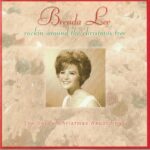
The CD artwork is very good.  The cover displays a small head and shoulders picture of Brenda Lee from 1965, so she was around 20 years old when the photo was taken.  (It’s actually a picture taken from the same photo session for her 1965 album cover Too Many Rivers.  It’s almost the same picture as the album cover, but not quite.  Her hair is the same, she’s wearing the same dress and the same necklace, but the head is turned more slightly).

Brenda Lee’s name appears at the top of the front cover in red script and the CD title below is in green.  All are placed on a muted background picture of a decorated Christmas tree covered in snow.  The words “The Decca Christmas Recordings” appear under her picture in red letters.

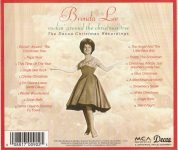
The back of the CD features a picture of Brenda Lee in a fanned party dress.  (She’s wearing the same dress as on the cover of her 1962 album, Brenda, That’s All).  Again, her name, the CD title and The Decca Recordings words appear above her.  On either side of the picture is a numerical track listing.  All is presented on the same muted Christmas tree as found on the front cover, but the picture is taken from farther away, so more of the tree is exposed.

The CD cover opens along a double fold out that is mostly biographical.  The inside three pages detail Brenda Lee’s career and the recording of all the songs contained here.  On the back, one side has a detailed numerical track listing including writer credits, recording dates and original album and catalog numbers for all the songs.  Very good, indeed!  Also included is an even earlier picture of a 13-year-old Brenda Lee, from 1958.  The other page on the flip side is a plain red background with an MCA Nashville logo and a Decca logo at the very bottom of the page.

The CD’s first song is the title of the CD and of course her biggest hit, Rockin’ Around The Christmas Tree, recorded in 1958.  She sure doesn’t sound 13 years old.  The song is a Rockabilly song that swings, and Brenda Lee uses her Country accent to great effect.

The 2nd song, Papa Noel, is one of the most unique Christmas songs I’ve ever heard.  Her first single, which was released in 1956, was the Hank Williams song Jambalaya and Papa Noel uses a Cajun influenced arrangement to capitalize on the former’s success.  Because it features Cajun influences and the lyrics speak of Santa Claus coming down to the bayou, it is a rather unusual Christmas song.  The simple arrangement is greatly enhanced with a sweet chorus of voices oohing and aahing their way along with Brenda Lee’s vocals.  It is easy to forget this is a Christmas song until you pay close attention to the lyrics.  This was the B side to the single Rockin’ Around The Christmas Tree in 1958.

Brenda Lee does a fantastic job with Jingle Bell Rock.  It combines her flair for Rockabilly while covering another Rockabilly Christmas song made famous by Bobby Helms in 1957.  The musical arrangement is not unlike the Bobby Helms original.  I think if Brenda Lee had recorded it first, it would have been as big a hit for her as it was for him.

The 5th and 6th songs, Christy Christmas and I’m Gonna Lasso Santa Claus, respectively, are from the second single Brenda Lee ever recorded in 1956.   Although the record label boasted that they were performed by Little Brenda Lee (9 Years Old), she was actually 12 when they were recorded.  Both songs feature a strong Country influence featuring lap steel guitar with a Western Swing arrangement.  Brenda Lee uses her Country twang to great effect.

Christy Christmas describes a wooden elf that Santa Claus carved from a Christmas tree and who comes to life to assist Santa with loading his sleigh and delivering all the toys.  This is an odd but likable Christmas song.

I’m Gonna Lasso Santa Claus has a strong Western Swing flavor to it as Brenda Lee declares that she is going to kidnap Santa Claus, steal his bag of toys and deliver them to all the other children that Santa fails to visit every year.  This is another very unique Christmas song that features Brenda Lee giving her Georgia dialect a strong workout.

The 7th song, Winter Wonderland, features a fast-paced arrangement, accented with Latin percussion and accompanied by flutes, violins and a light chorus.  It’s a terrific arrangement and very festive.  It uses all the traditional instruments found in other versions, but in a much different way.

The 10th song, The Angel And The Little Blue Bell, is the first of three original songs included on Brenda Lee’s first Christmas album.  It tells the story of a lonely, blue bell high up in a church steeple that no matter how hard he tries, he can’t make himself ring.  Then one Christmas Eve, an angel appeared to the blue bell and told him she was going to dry his tears by turning him into the brightest gold bell and giving him the best tone that would last and last.  The music that accompanies the lyrics is soft and simple and features a light melody of strings and celeste.  Once again, the light chorus gives this song a wonderful festive feeling.

Knowing that this was recorded in Nashville, I’m inclined to think that perhaps the Anita Kerr Singers provide the lush chorus, but I can not confirm this.  The original album was released on Decca Records, and I know that the Anita Kerr Singers worked a lot at RCA Nashville, but I don’t know if they worked outside of RCA Nashville or if Decca used the same studio.

Christmas Will Be Just Another Lonely Day is another original Christmas song and was written by Ray Stevens.  It features an upbeat rocking arrangement using traditional orchestral instruments.  Brenda Lee sings of her loneliness on Christmas Eve.  And even though everywhere is decorated for Christmas and the mood is festive, since her lover went away, Christmas Will Be Just Another Lonely Day.

The 15th song, Strawberry Snow, is the last of the original Christmas songs included on this Christmas compilation CD.  It features a string laden arrangement accented with celeste and organ that speaks sadly of… well, I don’t know what this song speaks of.  It has to be one of the strangest songs ever written.  It’s not really a Christmas song.  It doesn’t speak of Christmas, Santa or Jesus.  It speaks solemnly of accepting life’s path and knowing that the next day will be sweeter than today (???).  I looked up the lyrics and read them while listening to the song, but for the life of me, I can’t figure out what the heck the author was trying to communicate with the lyrics.  Is it a Country expression from a time ago before I was born?  I don’t know.  It’s a very strange song.

Anyway, the music is very lush, and our wonderful chorus is there to make this a beautiful Christmas song.  All the right pieces are there.  It has a terrific melody and arrangement, it’s just that it doesn’t make any sense.  But it’s a very unusual Christmas song, so I guess that’s all it needs to be.

The last three songs on the CD are the three recorded in 1965, after her Christmas album was released.  White Christmas is the first of this trio of traditional, secular Christmas songs.  The arrangement is very traditional, and the chorus is as well, but Brenda Lee’s 20-year-old voice is more mature than it was on her earlier Christmas records.  The Rockabilly era was over, and it was time to move on.  Most of Brenda Lee’s songs from the 1960s are very Country flavored.

And that is no more prevalent than on Jingle Bells.  Once again, the music and the chorus are traditional in all respects, but by now Brenda Lee has gone Country. There is nothing wrong with that.  But people expecting the ‘Rockin’ Around The Christmas Tree’ Brenda Lee will be caught off guard with these last three songs.

The CD closes with the reverent Silent Night.  Even with Brenda Lee’s Country dialect, I think she does a super terrific job with this song.  The music is very light, barely discernable.  The chorus is lush and soft.  Brenda Lee delivers one of the softest, solemn and passionate versions of this song I am familiar with.  But beware, it IS Country!

It was hit or miss for Brenda Lee by 1965.  Although she continued to release albums throughout the 1960s and 1970s, some performed well on the charts, and some didn’t.  Funny though, is that even though Brenda Lee WAS a Country singer, her records were not released to the Country music stations, and she didn’t chart her first album on Billboard’s Country charts until 1973.

So, what we have here is a very unique collection of Christmas songs from a young girl who will forever be known for recording one of the biggest Christmas records of all time.  This Christmas compilation may not appeal to people who know Brenda Lee for only one song, but I think that those who are familiar with Brenda Lee’s records will know of her Country flavor and will like this very much.  Yes, it is a Country Christmas CD, but it was recorded right in the heart of the Classic Christmas Music Era and all the arrangements of the songs are lush and traditional.

The CD’s liner notes gives those that are unfamiliar with Brenda Lee’s early career a great biography and history of these songs.  And out of the 18 songs here, six are unique to Brenda Lee, albeit some unusual ones at that.  Those that are familiar with this blog should know that I would like this very much and I do.

I give this CD :

****

November 5, 2022

#56

Larry Gatlin & The Gatlin Brothers Band
A Gatlin Family Christmas
Unknown Release Date

(Originally released 1982 on Columbia)

Back

Sony Music Special Products
Previously released as Columbia / Nashville PC 38183
© 1982 Sony Music Entertainment Inc./ (P) 1982 Sony Music Entertainment Inc.
Manufactured by Sony Music Special Products / “Sony” Reg. U.S. Patent & TM Office Marca Registrada

# 40 – 1982 – Billboard Country

Genre : Classic Country

I did not know what to expect from this Christmas CD from Larry Gatlin & The Gatlin Brothers.  I guess I expected a Country Christmas album, but this is far from that.  I am not familiar with The Gatlin Brothers at all.  This is probably the only thing I have heard from them on any kind of regular basis.

Larry Gatlin & The Gatlin Brothers are from southern Texas and began performing as a trio while in childhood.  As much as I can tell, it was always the three of them, but Larry Gatlin always got top billing.  That changed in 1979, when they officially became Larry Gatlin & The Gatlin Brothers.  They charted many hits on Billboard’s Country charts throughout the 1980s.  Things changed in Country music in the mid-80s, and as new singers and new trends came along, Larry Gatlin & The Gatlin Brothers fell out of favor.

This is their first Christmas album, released during their most popular period.  They would release another Christmas CD, Christmas With The Gatlins, in 1990.  This turned out to be a surprise CD for me.  It is filled with wonderful Christmas songs, some of which I am unfamiliar with.  There are only ten songs here, but that was normal for LPs back in the 80s, before CDs.  But they are ten beautiful Christmas songs.  All the string arrangements are provided by the Nashville String Machine.

This CD reissue comes from Sony Music Special Products and was originally released on Columbia in 1982.  I put the year of this CD release as 1982 because that’s the only date I can find on it.  CDs did not start being produced until 1985, so I know this is a reissue of their Christmas album from 1982, but I don’t know the release date of this CD.

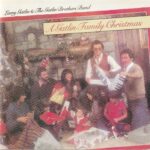
The cover of the CD is exactly the same as the cover for the album.  Good job!  It shows The Gatlin Brothers with their wives and children opening presents in front of a fireplace, next to an ornately decorated Christmas tree.  This is what a 1981 Christmas looked like.  The band’s name and CD title are at the top, just as they were on the album.

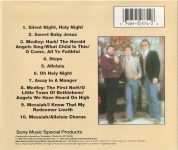
The back of the CD is similar to the back of the album.  Both feature the same picture of the three Gatlin Brothers standing in front of the same fireplace as from the front cover.  Both the album and the CD feature a numerical track listing, but the font has been changed for the CD.  This causes the text to appear much differently between versions.  Also missing from the back of the CD is any production and copyright notices that appear on the back of the album.  The back of the album had a more detailed song listing, including the lead singers of each song.

The CD cover comes out and opens along a single fold-out, but there is no information.  Both sides are completely blank.  What a missed opportunity to include a small bio of The Gatlin Brothers or lyrics, production notes, or anything!  Most of the information for these songs came from the back of the original album.

The back of the front cover features a numerical track listing with time signatures.  Below are writer and arranger credits.  The text is in black, and it’s superimposed against a light-yellow background.  Reading the writer credits reveals that three of the songs are original, two of which were written by Larry Gatlin.  All songs are presented in their original order.

Of the ten songs, all are traditional Christmas carols and hymns.  Rudolph, Frosty and even Santa himself do not make an appearance here.  There are two medleys, and they are also Christmas carols and hymns.  Of the traditional carols and hymns, all were arranged by Steve Gatlin.

The CD begins with Silent Night.  Larry Gatlin does a great job with the vocals.  The first half of the song has The Gatlin Brothers performing most of the instrumentation.  By the second half, the Nashville String Machine is accompanying the band, and all the Gatlin’s are harmonizing.

The 2nd song, Sweet Baby Jesus, I believe, is an original to this album.  It was written by Patricia Bunch, Mary A. Kennedy and Pam Rose.  This is the only version of this song I have and the only place in my Christmas collection it shows up.  The arrangement is light, and until the end, the music is performed mainly by The Gatlin Brothers Band.  The Adult Handbell Choir of Woodmont Baptist Church provides harmonies and bells.  The Gatlin Brothers harmonize extremely well.  They have always included Gospel music in their song selections, and it is no different with this song.

The first medley, the 3rd song, Hark! The Herald Angels Sing / What Child Is This / O Come, All Ye Faithful, starts with the Nashville String Machine and then is joined by Larry Gatlin.  As the songs change, the singer does as well.  Rudy Gatlin is joined on vocals by his brother Larry Gatlin for What Child Is This.  More piano is heard than strings.  The arrangement again changes slightly and while an organ closes this song, it opens the next one.  The first half of O Come, All Ye Faithful is all organ, while during the second half, all The Gatlin’s share the vocals.  This is a terrific song that showcases The Gatlin’s harmonies.  Ralph Geddes provides the organ arrangement.

The 4th song is another original Christmas carol, written by Larry Gatlin.  The song, Steps, is about the steps Jesus took from his infancy to adulthood that allowed sinners to be able to take their own steps into heaven.  It is mainly a piano song and during the refrain, the other Gatlin Brothers join together for the harmonies.  It is an endearing song of the life Jesus led to save all mankind.

The 5th song may be the best one on here.  The song Alleluia is again written by Larry Gatlin.  It is performed a cappella.  The Gatlin Brothers do a tremendous job of 4-part harmonizing.  The song speaks of the word Alleluia as more than just a word in a song, but rather a way of life, a way to express praise all through our days.

Steve Gatlin handles the vocals on O Holy Night.  This is a great version of this song, suited perfectly for Steve’s tenor voice.  As the Nashville String Machine provides lush arrangements, Steve brings his voice up to meet the rising pitch of the strings while the rest of The Gatlin’s come in to harmonize.

The 7th song is a change of pace.  Away In A Manger is performed by a children’s choir that comprises some of the younger Gatlin’s and other children.  The song begins with piano and organ, before the children begin.  It is a sweet and well-rehearsed chorus.  After the middle part, Larry Gatlin & The Gatlin Brothers take the second set of vocals.  All the Gatlin’s, young and old, are in attendance for the finish.

The 8th song is the final medley.  The First Noel begins, after a brief string intro, with an acoustic guitar while the strings come back for accompaniment.  All the Gatlin’s sing the vocals.  The second song of the medley, O Little Town Of Bethlehem, features Steve Gatlin.  The arrangement changes dramatically with the third part of the medley, Angels We Have Heard On High.  All the Gatlin’s join in with endearing and soulful harmonies on this Christmas hymn.  There is very little instrumentation, and what there is is mostly brass.

The 9th song, Messiah / I Know That My Redeemer Liveth features two songs from Handel’s Messiah that are not often heard.  Larry Gatlin does a great job with the vocals while accompanied by the Nashville String Machine.  This song features more Nashville String Machine than vocals and they occupy the last thirty seconds with a lush, solo performance.

The momentum doesn’t stop with the 10th and last song, Messiah / Alleluia Chorus, also from Handel’s Messiah.  This does not sound like The Gatlin Brothers Band as it is all the Nashville String Machine providing the instrumentation.  The Gatlin Brothers are joined by the Adult Choir of Woodmont Baptist Church for a rousing rendition of this Christmas classic.  It is traditional in all respects, right down to the layered chorus and big brass arrangement.  As far as this glorious song goes, and it is performed by many, many artists, this must be one of the finest ever recorded.  When I say this arrangement is big, that is no understatement.  I would never guess this to be on a Gatlin Brothers Christmas album.  It is a terrific way to end this CD.

As I said earlier, I am not that familiar with The Gatlin Brothers Band, but I should become more familiar with them.  I don’t know how their regular Country songs went, and they certainly sold a lot of them, but I can attest to their talents in performing sacred Christmas hymns.

Do not look at this as a Country Christmas album.  This is more than that.  It is very well produced and well thought out.  This CD contains all sacred songs delivered in a solemn and soulful manner.  The Gatlin Brothers relied on their Gospel roots, and it shows.  The Nashville String Machine provides lush arrangements of familiar Christmas hymns.  And when present, the Adult Choir of Woodmont Baptist Church gives the songs an added dimension.

This CD will appeal to a lot of people who enjoy sacred Christmas music.  It would mix in well with any Christmas playlist, or perhaps be best played by itself, straight through.  I was not that familiar with it until this review, but it will be a go-to Christmas CD in the future.

I give this CD :

*****

October 26, 2022

# 43

Hank Snow
Snow On Christmas
2007

Front
Back

(P) 2007 & © 2007 Bear Family Records Made In Germany
Original RCA Victor Aufnahmen
licensed from Sony/BMG Music Entertainment (Germany) GmbH
e-mail: bear@bear-family.de internet: wwwbear-family.de

Genre : Classic Country

Hank Snow was a Canadian Country singer who started releasing records back in the 1930s.  He was born Clarence Eugene Snow in Nova Scotia in 1914 and grew up poor.  His mother would play piano and sing around the house.  His parents divorced when he was eight and he went to live with his grandmother.  Eventually he returned to his mother.

By the age of 12, he had dropped out of school and was working on fishing boats but gave that up at age 16 after experiencing near death in a violent storm.  He bought himself a guitar and played and performed anywhere he could for anyone who would listen.

He joined a local radio station in Nova Scotia and performed a weekly show on Saturday nights.  He changed his name to Hank and auditioned for RCA Victor in Canada.  He received a recording contract and released his first record in 1936.  He had a radio show on Canadian national radio and toured the country.

Hank Snow stayed with RCA Victor and moved to Nashville, Tennessee in 1949.  His first record out of Nashville was a Top Ten hit and after joining the Grand Ole Opry, he became a national star.  Hank Snow had many hits on the Billboard Country Singles and Albums charts.  He became a naturalized citizen in America in 1958, and still maintained Canadian citizenship.

Hank Snow is a Country singer but has a lot of Western Swing roots and could be called a cowboy singer.  Even starting off, he billed himself as Hank Snow, The Singing Ranger.

The Christmas CD I am reviewing today, Snow On Christmas, contains all of Hank Snow’s Christmas output, starting with a single released in 1953.  Most of the CD is Hank’s first full Christmas album, Christmas With Hank Snow, released in 1966 and charted on Billboards Christmas chart in 1967.  I like it when these compilation CDs contain an artist’s complete works.  There are 21 songs on here and that is a lot for Christmas compilation CDs.

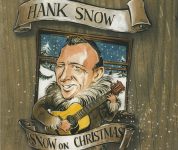
This compilation comes from Bear Family Records, a German based label that specializes in reissues of older Country, Blues, Rock and Pop albums.  The cover of the CD features a caricature of Hank Snow standing in front of a cabin window playing a guitar, dressed in a suede coat with fur trim against a snowy background.

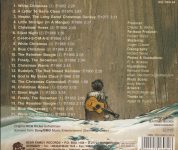
This CD is not in a regular plastic jewel case, rather it is a cardboard case that contains the CD and a 27-page booklet.  The back of the CD has a caricature of Hank from behind while sitting on the snow.  He is drawn much smaller than as found on the front, and he has his guitar slung around his back, but you only see the back of him.  A numerical track listing including recording years and time signatures is superimposed over the artwork.  To the right of all this is original and  reissue production credits.

Because it is a cardboard case, there is no cover to open.  The CD case opens to reveal a 27-page booklet that contains all the information I could possibly want.  Inside, the CD is secured in a tray on the left side.

The front of the booklet begins to the right and contains the same drawing as found on the back of the booklet, but larger.  The booklet contains a couple of color pictures of Hank in winter scenes.  One is in front of his house, and the other, he is standing in front of his tour bus.

The first page with text is an endorsement of the qualities of this compilation release.  Most of the book is made up of lyrics to all the songs.  The songs and lyrics are listed in numerical order.

Towards the end of the booklet, 4 pages are dedicated to what is called The Christmas Song Discography.  What follows is a detailed list of all the Christmas recording sessions Hank Snow did in chronological order.  There is a lot of information, and it contains things such as dates, recording locations, original catalog release numbers, songs, writers and the musicians on the recording sessions, if that was available.

The last two pages is a short list of some of Hank Snow’s larger CD compilation box sets.  Also, there is an address for the Hank Snow Country Music Centre in his hometown in Nova Scotia.  The last page of the booklet continues the list and at the bottom is a list of newsletters you can subscribe to to keep up to date with news in Country music.  (This CD having been released in 2007, most of the newsletters are probably no longer in publication).

This CD contains the best amount of information I’ve seen.  I have other Christmas compilation CDs that are just as detailed, but it is a rarity.

Beware, Hank Snow IS Country!  He may be from Novia Scotia, but his drawl is from the Deep South.  Early in his career, Hank Snow always wanted to emulate his hero, Jimmie Rodgers, the Country pioneer.  He sang like Jimmie Rodgers; he played guitar like Jimmie Rodgers, and he even named his son Jimmie Rodgers Snow.

Because this CD contains all of Hank Snow’s Christmas output, there are duplicate song titles on here.  Because that doesn’t happen often with Christmas CDs, I thought it would be fun to compare the different versions of the duplicates.

The 1st song on the CD is one of those duplicate songs, White Christmas.  The first one we come to, White Christmas (2), is from 1962, and the 8th song, White Christmas (3) is from Hank Snow’s 1966 Christmas album.  The last song on the CD, track 21, is also White Christmas (1), recorded in 1953.  On the 1953 version, Hank is billed as Hank Snow The Singing Ranger.  It has a Western Swing feel to it.  Pedal steel guitar, eloquent electric guitar, fiddle and brushed snare differentiate this from the later ones.  The versions from 1962 and 1966 were both recorded at RCA Nashville with Chet Atkins producing.  Both feature some of the same musicians and both have close to the same arrangement.  The choruses sound similar but feature different members. Hank Snow’s vocals are not that different between versions, but White Christmas (1) from 1953 features a slower tempo.

The next song that is repeated is Christmas Roses, an unfamiliar song and possibly written in 1953 for Hank Snow’s single.  The 5th song is the version from 1966, and the 16th song is a version from 1953.  Here again, it has a Western Swing feel.  The 1953 version opens with organ and steel guitar in unison and shared leads throughout the song.  There is a wonderful fiddle solo in the middle.  The Christmas Roses from 1966 is more polished and acoustic guitar and piano share the melody.  There is a nice acoustic guitar solo in the middle, where the fiddle solo is in the 1953 version.  Hank’s voice once again is virtually unchanged.

The next duplicate song is Silent Night.  The 6th song is from 1966, and the 17th song is a version from 1953.  Both open with an organ while the 1953 version sounds like a church organ and the 1966 version’s organ is more like a Hammond organ.  The version from 1966 has the organ matched with a celeste.  Both versions feature a spoken passage after the middle of the song passes.

Blue Christmas comes next.  The version from 1953 opens with steel guitar and is matched with acoustic guitar and fiddle throughout the song.  There is a fiddle solo in the middle of the song.  The 1966 version opens with a staccato guitar for the first four bars and the celeste takes the next four before coming together during the song.  The 1966 version features a strong chorus while the 1953 version does not.  In fact, as the liner notes indicate, no chorus is present on any of the recordings from 1953.

Another song that appears twice is an original from Hank Snow’s Christmas single in 1953, The Reindeer Boogie.  It is a Rockabilly song.  The 1953 version, which is the 19th song, uses sleigh bells to start the song, after that, it is pretty much a fiddle song.  Boogie guitar finishes the song while the bells return as well.  In 1966, the song opens with dual guitars and towards the end features boogie woogie piano.

Frosty The Snowman is the last of the songs that have appeared twice.  The 1966 version features piano as the main instrument while the guitars provide accompaniment.  In the 1953 version, acoustic guitar and fiddle introduce the song and it is once again, primarily a fiddle song.  The middle part features a fiddle solo with sleigh bell accompaniment.   I think the 1953 version of Frosty The Snowman may be one of the best songs on here.

There are other great songs on this CD that are worthy of a mention.  The 12th song is Christmas Wants, a spoken word song accompanied by soft organ from the 1966 album.

The last two songs on the original album are God Is My Santa Claus and The Christmas Cannonball.  God Is My Santa Claus tells the story of how a child responds to his teacher when given the assignment to write a letter to Santa Claus.  His response is that he does not have to write Santa letters, he just needs to kneel and pray.  It is one of the more unusual Christmas songs I’ve ever heard, and it certainly is worthy of a listen.

The Christmas Cannonball, the last song on the original album, tells the story of the train that comes to town from the North Pole with Santa Claus aboard.  The train is called The Christmas Cannonball and the song is an obvious homage to all the “cannonball” songs that were popular in Country music.  I assume these two songs were written for his album.  They do not show up on any other Christmas CDs I have, so that would be my first clue.

Two other unique songs come early on the CD.  The 2nd song is A Letter To Santa Claus from a single released in 1974.  It’s a wish list from someone who has fallen into bad times and asks Santa for love to fill his empty heart.  It features a wonderful fiddle solo followed by a vocal recitation before returning to the melody.  It is a terrific Christmas song.

The 3rd song tells the story of Nestor The Long Eared Donkey.  Nestor was a donkey that all the animals made fun of because his ears dragged on the ground.  As the story progresses, we find out that Nestor was the donkey that traveled Mary & Joseph to the manger to give birth to the baby Jesus.  It was written in 1975, by Gene Autry, and was made into a TV special in 1977.  I don’t know if the song was written for Hank Snow or if anybody had recorded it before Hank Snow since this is the only version I have in my collection.

Okay.  Whew.  I’ve written about a lot of songs, and I didn’t even cover all the songs on this large Christmas compilation CD.  21 songs are a good number, when most compilations have twelve to fourteen.

As I stated in the beginning, Hank Snow IS Country, and his heavy drawl may turn some people off.  The songs are great with many original tunes.  The instrumentation on the songs from the 1966 album is good, thanks to Chet Atkins.  The songs from 1953, billed as Hank Snow And His Rainbow Ranch Boys, are Western Swing.  Lead guitar, fiddle, steel guitar and organ give a different but pleasant sound.

This CD is not going to appeal to a lot of people.  First, Hank Snow’s Country drawl.  Second, it’s old Christmas music.  Many of the Christmas songs from the 1950s and 1960s are timeless, they never sound dated.  These are Old Country songs, and you must like Old Country to really appreciate them.

Nonetheless, it is great to have this in my collection.  It contains all of Hank Snow’s Christmas output on one CD.  It’s from 1953 & 1966 (mostly).  It is a little on the unusual side of Christmas CDs.  And the CD liner notes are fantastic, so it fits all my requirements for a great CD.

I give this CD :

****

October 22, 2022

# 34

VA - Classic Country Christmas
(Sony BMG Music Entertainment)
2005

Back

This compilation (P) 2005 SONY BMG MUSIC ENTERTAINMENT © 2005 Compass Productions. Manufactured By SONY BMG MUSIC ENTERTAINMENT / “Sony” Reg. U.S. Patent & TM Office Marca Registrada / Visit our website www.smsp.com

Genre : Classic Country

This Classic Country Christmas compilation comes to us from Sony BMG Music Entertainment and contains 12 terrific Classic Country Christmas songs by some of the most popular Country stars of the 60s, 70s and 1980s.

The front cover features a picture of Johnny Cash, Dolly Parton, Glen Campbell and Willie Nelson in a box with the CD title above the pictures.  Below is a list of the 12 artists that appear here.  The back of the CD has a numerical track listing with performing artists under the song titles.  To the left is a smaller copy of the same picture used for the front cover.

The cover opens along a single fold-out.  The inside features a color photograph of a non-descript timber fence in a snow-covered field at the base of a large mountain range.  The right side of the fold-out has the same pictures from the front cover along the top.  Below is the title of the CD.  Below that is a numerical track listing with performing artist credits.  Below the song titles are the writer and year of release credits.

The back of the fold-out has color pictures of other compilation CDs from Compass Productions.

There are twelve songs included and although that is not very many for a CD that can hold 76 minutes, it is very typical of budget Christmas compilation CDs.  There is a total of 33 minutes of music.

Two of the songs included are Christmas hymns or carols, the other 10 are traditional secular Christmas songs from the 20th century with an emphasis on five lesser-known Christmas songs.

The CD begins with Willie Nelson singing Winter Wonderland from his 1979 Christmas album Pretty Paper.

The second song should be familiar to most listeners.  It is the Willie Nelson penned Christmas standard Pretty Paper performed and made famous by Roy Orbison, recorded in 1963.  It is the definitive version of this song.  It was a Top 30 single in 1964 on Billboard’s Christmas chart.

The third song, Hard Candy Christmas, may be Dolly Parton’s best known Christmas song.  It was recorded and released as a single in 1982 and was a Top Ten single on the Billboard Country charts.  I believe it was written specifically for Dolly, and it showcases Dolly’s country accent wonderfully.

The fourth song pairs up the husband-and-wife duo of George Jones and Tammy Wynette sharing a duet on Mr. & Mrs. Santa Claus from 1973.  It is an original Christmas song that describes the lasting love a husband and wife share at Christmas time.

Johnny Cash performs I Heard The Bells On Christmas Day from his 1963 Christmas album.  It is a grandiose arrangement that allows Johnny Cash’s deep baritone voice to shine.

The Oak Ridge Boys are here with Go Tell It On The Mountain.  I like the Oak Ridge Boys, who are known for their structured harmonies, specifically Richard Sterban’s bass voice, but you can tell immediately that this song is a little different than the others, mainly because it was recorded in 1994 and employs a more contemporary arrangement that clashes with the other songs on here from the 1960’s and 1970’s.  It is the most recent song on here.  After a soft introduction, the song breaks into a Gospel influenced, rocking guitar driven version of this Appalachian hymn. The Oak Ridge Boys employ their Gospel roots very well, but the song has too much of a modern feel to it compared to the other selections.  You can definitely tell this was recorded in the 1990’s.

The oldest song on this Christmas compilation CD has Hank Snow “The Singing Ranger” singing a Western Swing influenced rendition of Frosty The Snowman from 1953.  Hank’s Country twang lends very nicely to this Christmas classic.  It was first recorded by Gene Autry in 1950, so this came out just after the original.

White Christmas is performed by Charlie Rich, recorded in 1974.  Charlie Rich was one of the biggest selling Country artists in the 1970’s and his smooth voice does this Gospel influenced arrangement very nicely with a soft chorus in the background.

Alabama provides a very solemn Christmas song with their original Christmas tune Santa Claus (I Still Believe In You).  It was included on their million selling Christmas album from 1985, Christmas.

One of the standout songs on here, and one of the best Classic Country Christmas songs ever produced comes courtesy of Loretta Lynn from her 1966 Christmas album and the album’s title, Country Christmas.  Loretta Lynn shares her Country twang with pedal steel guitar to make a wonderful Christmas classic.

Delivering a somber rendition of the most recorded Christmas hymn has Waylon Jennings and his wife Jessie Coulter sharing a duet on Silent Night, Holy Night.  It may be safe to say that I feel the convictions they share on this song may be due to the birth of their son who was born earlier in the year.

The CD closes out with Glen Campbell performing the traditional carol Brightest And Best, recorded in 1988.  Glen is accompanied by The A Strings, a Nashville based string quartet.  It is one of the best Christmas songs featured here.

Sometimes it’s hard to fill in a lot of pages with a compilation CD that contains a lot of songs that appear on other Christmas compilations.  This Christmas compilation CD contains some terrific Classic Country Christmas songs, albeit only 12.  One of the best things about this is the variety of the songs.  With quite a few originals and a few more not so familiar songs, it provides a well-balanced Christmas CD.

(I have Christmas CDs by almost all the artists featured here.  Look for those reviews in this blog’s future).

If you like older Country Christmas music, you should enjoy this very much.

I give this CD :

***1/2*

October 14, 2022

# 22

Jim Reeves
Twelve Songs Of Christmas
1988

(Originally released 1963 on RCA Victor)

Back

(P) 1988, 1963 BMG Music.
The BMG logo is a trademark of BMG Music.
Manufactured by BMG Special Products, a unit of BMG Entertainment

# 15 – 1963 – Billboard Christmas

Genre : Classic Country

I picked this up to review the next one in line and was excited that it was Jim Reeves’ classic Christmas album from 1963, Twelve Days Of Christmas.  Re-released on CD in 1988 by BMG Music, it brings fond memories for me because it was one of the first Christmas CDs I bought, and it has some wonderful Christmas songs on it.  Yea!

Jim Reeves was born in Galloway, Texas in 1923 into a large family with 8 children, Jim being the youngest.  Throughout his teens, Jim Reeves was quite athletic and earned an athletic scholarship in baseball to the University of Texas.  He would go on to play baseball in the minor leagues for the St. Louis Cardinals before an injury cost him his career.

After baseball, Jim Reeves started working at local radio stations in Louisiana, performing on the Louisiana Hayride as well and singing in small clubs when he got the chance.  After meeting the right people, he eventually ended up at RCA Nashville in 1955.  He initially sang like the other Country Western stars of the day, but he was not happy with that style.  Eventually he took a chance and sang in a much softer, deeper voice and he became an instant hit.  He scored big hits on the Country and Pop charts with “Four Walls” and his signature song, “He’ll Have To Go”.

Jim Reeves enjoyed international success as well and was more popular in South Africa than Elvis.  He even made a few records in that native language.  In fact, this very album was released in South Africa a year earlier as Merry Christmas From Jim Reeves, minus Silver Bells.

Sadly, Jim Reeves died young, at age 40, in a plane crash during a violent thunderstorm over Nashville, Tennessee.

The artwork on the front cover of this reissue resembles the cover on the original album from 1963, except the CD has a green border around the edges.  Otherwise, the picture is identical.  The back of the CD features a numerical track listing on a green background.  All the songs are in their original order and there are only 12 original songs.

The inside artwork is a little disappointing.  The front cover does not open up; it is a single piece of paper with the cover on one side and the same numerical track listing as on the back of the CD except on a white background.  It would have been nice to have at least a few pages with a small biography and some historical notes on the recording of this Christmas album.

There are some Christmas classics on here.  There are personal favorites, and even some that have become Christmas standards.  Without much information from the CD to go by, I must rely on my knowledge and intuition to come up with the rest.  The back of the original album has some good information, so I was able to gather it from that.  Also, I use sites like Wikipedia, Discogs and AllMusic to collect information for many of these reviews.  (Look for my Disclosure page to see a list of the sources I use to gather information).

Knowing that Jim Reeves was on RCA and recorded in Nashville, it tells me that Chet Atkins was the producer and the group responsible for the music was collectively known as the ‘A Team’.  In addition to releasing his own albums, Chet Atkins was the main producer for RCA Nashville, and he liked to use the same musicians in all his recording sessions.  Some of the major performers include Floyd Cramer on piano, Chet Atkins on guitar, Charlie McCoy on harmonica, Norbert Putnam on bass, Earl Scruggs on banjo, Boots Randolph on sax, and so many others.  In addition, the background singers consisted of The Jordanaires and the Anita Kerr Singers.  (I have Christmas albums and CDs on many of these artists).

The song selection is a mix of Christmas standards from the twentieth century, sacred hymns and carols and some that are unique to just a few Country Christmas releases.  The best of the more uncommon Christmas songs is C-H-R-I-S-T-M-A-S, written by Eddy Arnold and Jennie Lou Carson in 1949.  Eddy Arnold may have written it, but Jim Reeves owns it.  His is the most featured version of the song on many Christmas compilations.

Another Christmas classic most associated with Jim Reeves is An Old Christmas Card.  It tells the story of a man finding the first Christmas card he received from his wife, mixed in with the old Christmas decorations.  The song does not explain how he came to lose his wife, but it speaks of true sentimentality.

Another song that seems to be written for this album in 1963 is Senor Santa Claus.  This is the only version I have, and the only instance of it showing up in my collection.  It tells the story of a cowboy asking Santa for a single peso so he can buy something special for his senorita.  It’s one of those unique Christmas songs that is tucked away on an album from a long time ago.

Jim Reeves does an excellent job with all the familiar Christmas songs.  Jingle Bells, Silver Bells, Mary’s Little Boy Child and Silent Night are exceptional.  All the songs feature a mixed chorus of background singers.  Without solid information to go by, I can only assume they are the Anita Kerr Singers.  They were tied to RCA Nashville, and I know Chet Atkins used them a lot.  They provide a soft, somber accompaniment to Jim’s deep baritone voice.

Do not think of this only as a Country Christmas album.  After hitting it big in the late fifties, Jim Reeves consistently charted on both the Country and the Pop charts equally.  There is not a bad song on here.  With some not so familiar songs and other easily recognizable ones, most listeners would find this very pleasing during the holidays.  Most of the instrumentation does employ traditional country instruments and there is also a wonderful string section to give it that Classic Christmas feel.  With a little Country flavor thrown in, this CD will mix in well with Christmas songs from all decades.  This wonderful Christmas album from 1963 still holds up well in the 21st century.

I give this CD :

****1/2 *

October 12, 2022

# 17

Loretta Lynn
The Best Of Loretta Lynn - 20th Century Masters - The Christmas Collection
2005

(Originally released 1966 as Country Christmas on Decca)

Back

(P) © MCA Nashville, a Division of UMG Recordings, Inc.,
Distributed by Universal Music & Video Distribution, Corp.

# 103 – 1967 – Billboard Country

Genre : Classic Country

Loretta Lynn, the Queen of Country Music of the 1960’s.  That should tell you everything you need to know about Loretta Lynn, if you’re not already familiar with her.  Loretta Lynn was born in Butcher Hollow in eastern Kentucky in 1932.  She grew up poor in a region of Kentucky where everyone’s livelihood rested on the coal mining industry.  She married at 15 and had 4 children by the time she was 20.  Loretta didn’t learn to play guitar until she was 21.  She signed her first record contract in 1960, and by the end of the year she was considered the 4th Most Promising Country Female Artist according to Billboard.

Loretta Lynn was the biggest draw in Country music throughout the 1960’s.  Her career was still going very strong in the 70’s as well, appearing on Hee Haw and many other variety shows of the time.  She was reintroduced to a new audience in the 1980’s with the blockbuster movie release ‘Coal Miner’s Daughter’, which tells the story of her life.  She was always a huge draw even when new artists such as Dolly Parton (1970’s), Reba McEntire (1980’s) and Faith Hill (1990’s) came along.

The best thing about this CD of Christmas songs by Loretta Lynn, is, although it is titled differently than her original Christmas album from 1966, it is that same album in its entirety, and all songs are presented in the original order.

The cover of the CD reissue uses the same photo from the original LP but does not include the graphics that surround the original photo.  The artwork on the back of the CD features a numerical track listing, different than what appeared on the back of the 1966 release.

The CD cover opens to a two-page fold-out that features the original liner notes from the back of the LP on the left side but in a different font and layout, but all the same wording is there.  The right side features a numerical track listing with the writers listed under each song.  On the far right are original album credits and reissue credits.  On the back of the fold-out is a close-up picture of pinecones on an evergreen wreath with red ribbons.

The CD contains all 12 songs from the original LP and in the same order.  There are 6 songs most listeners will be familiar with, with a mix of 1 traditional carol and more modern secular Christmas songs.  The other 6 songs, I believe, are original to this album, 4 of which Loretta wrote herself.  (Country Christmas, It Won’t Seem Like Christmas (Without You), To Heck With Ole Santa Claus and I Won’t Decorate Your Christmas Tree).  All songs feature The Jordanaires as background singers.

All songs feature a terrific Classic Country flavor.  In 1966, there was no mistaking Country music.  Pedal steel and electric guitars, Loretta’s thick Country accent and The Jordanaires present a Classic Country Christmas from 1966!

I personally like the original songs written by Loretta Lynn the best and think they are the standout songs presented here.  Familiar Christmas songs are great, but I think the unique, original songs you find in some collections are more interesting.

In fact, the CD starts out with a Loretta Lynn original, the title from the original album, Country Christmas.  Just hearing this song as the first song on this CD tells you what you are in store for.  Wonderful steel guitar and Loretta’s twang set you up for what is yet to come.

Loretta does a fine job with the more common Christmas songs most people will be familiar with.  And of those, I think Away In A Manger is the best of this group.  Most earlier Country artists grew up in church singing hymns and so already have a strong familiarity with traditional hymns and the way to sing them.  You can hear her conviction in her delivery of this somber Christmas hymn.

Some of the standout secular Christmas songs on here are Silver Bells, Blue Christmas and Frosty The Snow Man.

Country music in the 1960’s was far different than it is in the 21st century.  If you prefer your Country music from 50 years ago to what is presented as Country today, then you will find this CD reissue a treat.  If you like Christmas songs with a strong Classic Country feel to them, then this CD is a must have for your collection.  And as I stated earlier, this is the same album as released in 1966.  No more, and definitely, no less.  (Loretta Lynn did another Christmas CD in 2006.  Look for a review of that later in this blog’s future).

I give this CD :

****